
Introduction
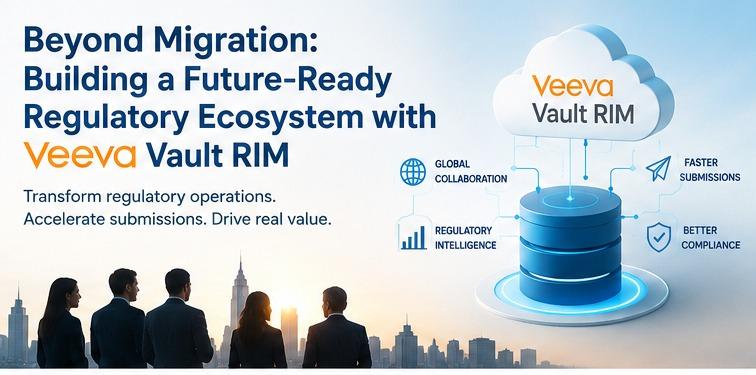
In today’s rapidly evolving life sciences landscape, regulatory operations are no longer just compliance-driven—they are strategic enablers of faster market access. Organizations are increasingly transitioning to Veeva Vault RIM to unify regulatory data, streamline submissions, and drive global collaboration. However, migrating to RIM is not just a system upgrade—it’s a business transformation. Without the right approach, organizations risk data inconsistency, process misalignment, and delayed ROI. This blog explores three critical pillars to ensure a successful migration and optimized outcomes.
1. Develop a Strategy: Clarify the Case for Veeva RIM
A successful migration starts with a clear strategic vision, not technology selection alone.
Why Veeva Vault RIM?
Modern RIM transformations are process-led, focusing on end-to-end regulatory efficiency rather than siloed upgrades. Key drivers include centralized regulatory data and documents, streamlined submission planning and tracking, improved global regulatory visibility, and automation of workflows and repetitive tasks. Building a strong business case is essential. Your strategy should address business outcomes, not just IT benefits, align with regulatory affairs strategy, and include measurable KPIs such as submission timelines, compliance rates, and data quality. According to Veeva best practices, organizations must align stakeholders early, including Regulatory, IT, and Quality teams; define future-state processes alongside system design; and establish governance and ownership models.
There are several strategic pitfalls to avoid, including treating migration as a “lift-and-shift,” ignoring process redesign, and lacking executive sponsorship.
Tip: Think “Transform → Standardize → Digitize,” not just “migrate.”
2. Assess & Prepare Your Data
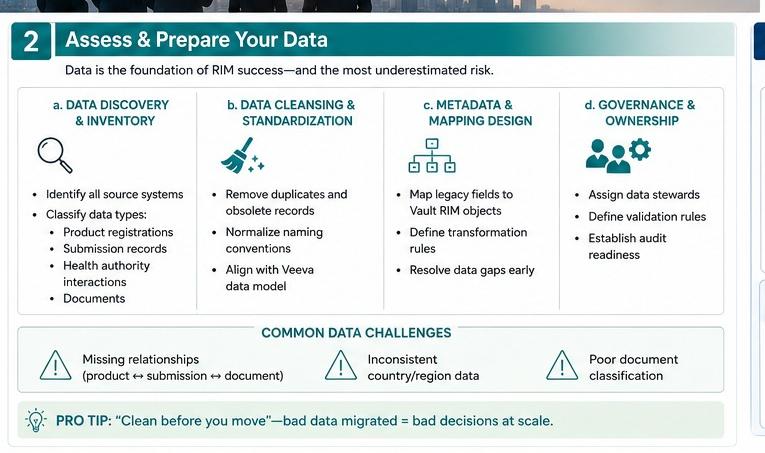
Data is the foundation of RIM success—and the most underestimated risk. Data preparation matters because migration complexity often comes from multiple legacy systems such as eTMF, submission systems, and tracking tools, along with inconsistent data models and poor metadata quality. Data migration in RIM is often time-consuming but critical for long-term value. A key activity in data preparation is data discovery and inventory. Organizations should identify all source systems and classify data types, including product registrations, submission records, health authority interactions, and documents.
Another important activity is data cleansing and standardization. This involves removing duplicates and obsolete records, normalizing naming conventions, and aligning data with the Veeva data model. Veeva emphasizes understanding your data model upfront to ensure quality and usability. Metadata and mapping design are also essential. Organizations should map legacy fields to Vault RIM objects, define transformation rules, and resolve data gaps early in the process. Governance and ownership play a critical role in maintaining data quality. This includes assigning data stewards, defining validation rules, and establishing audit readiness. Common data challenges include missing relationships between products, submissions, and documents, inconsistent country or region data, and poor document classification. Tip: “Clean before you move”—bad data migrated equals bad decisions at scale.
One of the biggest mistakes organizations make is separating data migration and system implementation. The key to success is staging and blending data and application workstreams optimally by orchestrating both together throughout the transformation journey.
Why Parallel Workstreams Matter
Veeva recommends addressing business and technical needs in parallel, ensuring alignment between system configuration, business process redesign, and data migration timelines. An optimal workstream model includes three key areas. The Application Workstream focuses on configuring Vault RIM modules such as Registrations, Submissions, and Publishing, while also defining workflows and lifecycle states and conducting validation activities including UAT and PQ. The Data Migration Workstream follows an Extract → Transform → Load (ETL) approach and uses an incremental migration strategy to determine whether historical data should be archived or migrated while prioritizing active regulatory data. The Integration Workstream focuses on connecting Vault RIM with clinical systems, quality systems, and external partners. Vault connections require detailed data mapping and configuration effort, reinforcing the need for early planning.
A blended execution approach ensures that data and application activities progress together throughout the project lifecycle. During the Design phase, the focus is on data model mapping and process design. During the Build phase, transformation logic and system configuration are developed. The Test phase includes data validation and User Acceptance Testing (UAT). Finally, during the Deploy phase, the final migration is completed and the system goes live.
Best practices for blending workstreams include running mock migrations during UAT, using sandbox environments for testing, enabling business user involvement early, and adopting a phased rollout rather than a big-bang approach whenever possible. Hands-on user engagement significantly improves adoption and reduces post-go-live issues.
Key Success Factors Across All Phases
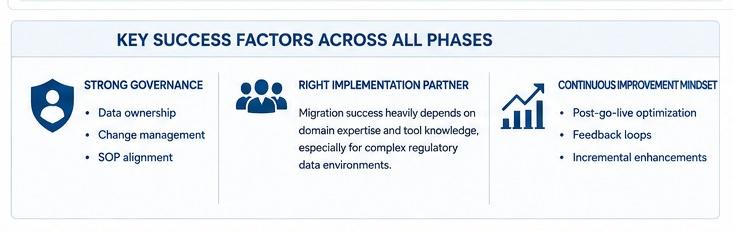
Strong governance is essential for a successful RIM transformation and includes clear data ownership, effective change management, and alignment with Standard Operating Procedures (SOPs). Choosing the right implementation partner is equally important. Migration success heavily depends on domain expertise and tool knowledge, especially when working within complex regulatory data environments. Organizations should also adopt a continuous improvement mindset. This involves post-go-live optimization, establishing feedback loops, and implementing incremental enhancements to ensure the system continues to deliver value and evolve with business needs.
Conclusion: From Migration to Transformation
Migrating to Veeva Vault RIM is not just about replacing legacy systems—it’s about reimagining regulatory operations. To truly optimize outcomes, organizations should start with strategy, not technology, treat data as a strategic asset, and integrate data and application workstreams. Organizations that follow this approach don’t just migrate—they unlock faster submissions, better compliance, and real regulatory intelligence.