
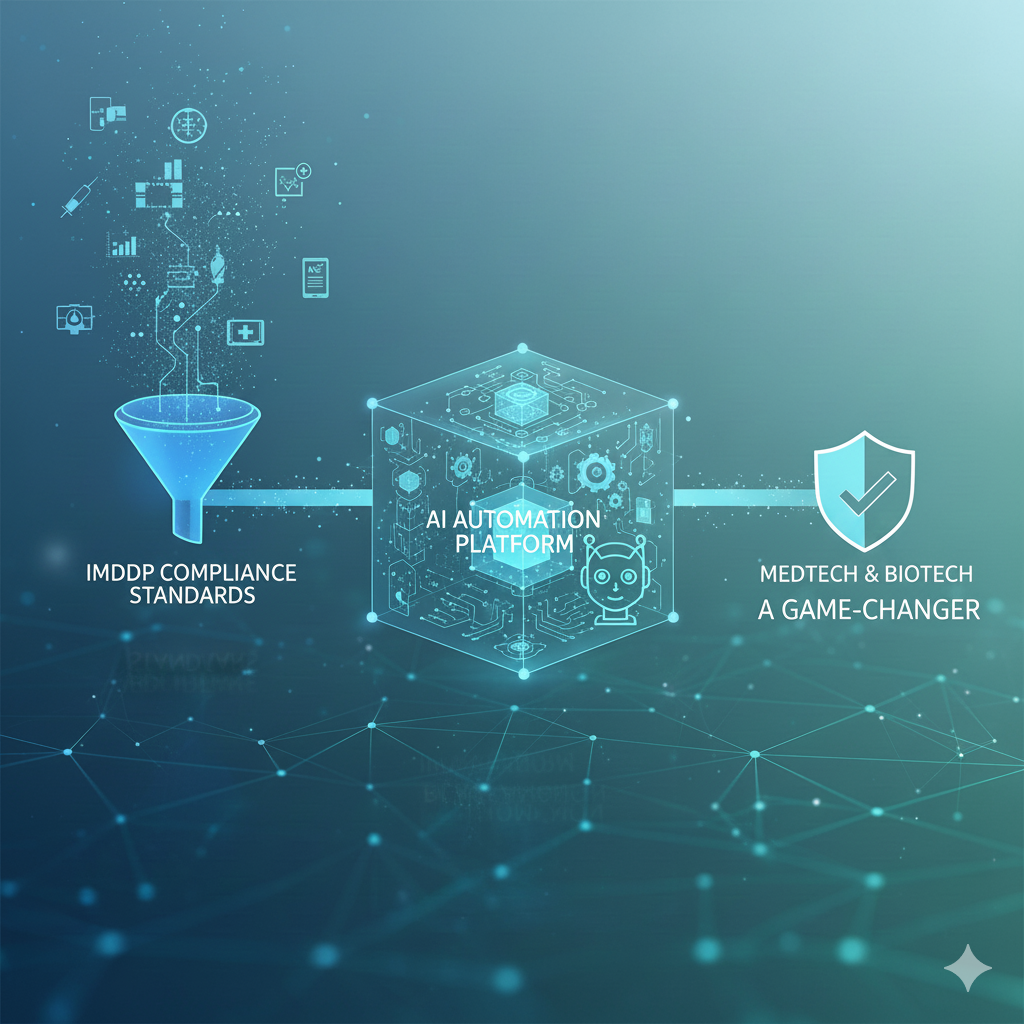
The International Medical Device Regulators Forum (IMDRF) has established a comprehensive framework for adverse event reporting that applies across multiple jurisdictions, creating both challenges and opportunities for MedTech and Biotech organizations. As regulatory requirements become increasingly complex and reporting volumes surge, artificial intelligence is emerging as a transformative force in compliance management.
Understanding the IMDRF Compliance Landscape
The IMDRF framework harmonizes adverse event reporting requirements across major regulatory markets, including the FDA, EMA, Health Canada, PMDA, and TGA. This harmonization brings consistency but also demands sophisticated systems capable of meeting multiple regulatory standards simultaneously. Organizations must navigate complex coding requirements, strict timelines, and evolving documentation standards while maintaining the highest levels of data quality and accuracy.
For MedTech and Biotech companies operating globally, IMDRF compliance represents a significant operational challenge. Manual processes struggle to keep pace with the volume and complexity of modern reporting requirements, leading to resource strain, potential compliance gaps, and delayed submissions.
The AI Revolution in Regulatory Compliance
Artificial intelligence is fundamentally transforming how organizations approach IMDRF compliance. By automating labor-intensive processes and applying sophisticated algorithms to complex regulatory tasks, AI-powered solutions are enabling a new era of efficiency and accuracy in adverse event management.
Intelligent Medical Device Coding stands at the forefront of this transformation. Traditional manual coding of adverse events is time-consuming, prone to human error, and requires significant expertise. AI-driven automation changes this paradigm entirely by analyzing complaint narratives, device information, and event descriptions to assign accurate codes in real-time.
This intelligent coding eliminates the variability and errors inherent in manual processes. Machine learning algorithms trained on thousands of cases understand the nuances of medical terminology, device classifications, and event categories. They consistently apply coding rules across all cases, ensuring standardization and regulatory compliance.
Real-Time Accuracy and Compliance Assurance
Speed and accuracy are critical in pharmacovigilance. AI automation delivers both by processing cases the moment they arrive, applying appropriate codes instantly, and flagging any potential issues for human review. This real-time processing ensures that organizations can meet even the most aggressive regulatory timelines without compromising quality.
The system validates codes against current regulatory requirements, automatically updating as guidelines evolve. Whether dealing with EU MDR classifications, FDA problem codes, or Health Canada adverse event categories, AI ensures that every case receives the correct designation according to the applicable regulatory framework.
Adaptability Across Regulatory Frameworks
One of the most powerful aspects of AI-driven compliance solutions is their adaptability. The same system that handles EU MDR requirements seamlessly adjusts to FDA guidelines, demonstrating the flexibility that global MedTech and Biotech organizations require.
EU MDR brought sweeping changes to medical device regulation in Europe, introducing new classification rules, enhanced post-market surveillance requirements, and stricter documentation standards. AI automation adapts to these requirements by understanding MDR-specific coding needs, classification criteria, and reporting timelines. The system ensures that every case destined for European authorities meets MDR standards precisely.
Similarly, FDA guidelines for medical device reporting through MedWatch and manufacturer reporting requirements have their own unique requirements. AI systems trained on FDA frameworks understand these distinctions and apply them appropriately, ensuring that US-bound reports meet all regulatory expectations.
Quantifiable Impact: Up to 72% Cost Reduction
The financial impact of AI automation in IMDRF compliance extends far beyond simple efficiency gains. Organizations implementing AI-driven coding solutions report cost reductions of up to 72%, a transformative improvement that stems from multiple sources.
Labor costs decrease dramatically as AI handles the bulk of coding work that previously required teams of trained specialists. What once took hours per case now happens in seconds, allowing organizations to process significantly higher volumes without proportional increases in staffing.
Error remediation costs plummet as AI eliminates the mistakes that trigger regulatory queries, resubmissions, and compliance investigations. Each avoided error saves not only the direct cost of correction but also the opportunity cost of delayed processing and the reputational risk of compliance issues.
Training and onboarding expenses diminish as new team members can leverage AI systems that guide them through complex coding decisions. The institutional knowledge that traditionally resided in the minds of senior specialists becomes embedded in the AI system, reducing dependency on individual expertise.
Texium Solutions: Leading the AI Compliance Revolution
Texium Solutions has developed comprehensive AI-powered capabilities specifically designed to address the IMDRF compliance challenges facing MedTech and Biotech organizations. Our intelligent coding solution represents the culmination of deep regulatory expertise combined with cutting-edge artificial intelligence technology.
Advanced AI-Driven Medical Device Coding forms the core of our compliance offering. Our system analyzes incoming complaints and adverse events using natural language processing to understand the clinical context, device involvement, and event severity. Machine learning algorithms then assign accurate codes based on applicable regulatory frameworks, ensuring consistency and compliance across all submissions.
The system operates in real-time, processing cases as they arrive and eliminating the backlogs that plague manual operations. Coding accuracy reaches levels that exceed human performance while maintaining the speed necessary for regulatory compliance. Every code assignment includes confidence scores and supporting rationale, providing transparency and auditability for quality assurance teams.
Regulatory Framework Adaptability ensures that Texium’s solutions work seamlessly across multiple jurisdictions. Whether your organization reports under EU MDR, FDA regulations, Health Canada requirements, or multiple frameworks simultaneously, our AI system applies the correct standards automatically. The system updates continuously as regulations evolve, ensuring perpetual compliance without manual intervention.
Error Elimination and Quality Assurance represent critical differentiators. Our AI doesn’t just code faster; it codes better. By eliminating human errors, ensuring consistent application of coding rules, and flagging potential issues before submission, Texium’s solutions dramatically improve the quality of regulatory submissions. Built-in validation checks verify that all required fields are complete, codes are appropriate for the device and event type, and submissions meet jurisdiction-specific requirements.
Cost Optimization Through Intelligence delivers the measurable financial benefits organizations need to justify compliance investments. Texium’s solutions reduce operational costs by up to 72% through automated processing, reduced error rates, optimized resource allocation, and accelerated case throughput. Organizations redirect savings toward strategic initiatives while maintaining the highest compliance standards.
Seamless Integration and Deployment ensures that adopting AI automation doesn’t disrupt existing operations. Texium’s solutions integrate with major safety databases, quality management systems, and reporting platforms. Implementation follows a structured approach that minimizes disruption while maximizing value realization, with full deployment typically completed within weeks rather than months.
Beyond Coding: Comprehensive AI Capabilities
While intelligent coding forms the foundation, Texium’s AI capabilities extend across the entire compliance workflow. Automated case triage prioritizes serious events for immediate attention, intelligent duplicate detection prevents redundant processing, and predictive analytics identify potential safety signals before they become critical issues.
Natural language processing extracts key information from unstructured narratives, emails, and call center transcripts, automatically populating safety database fields with relevant details. This comprehensive automation creates an end-to-end intelligent system that transforms compliance from a resource-intensive burden into a streamlined, efficient process.
The Future of IMDRF Compliance
As regulatory requirements continue to evolve and expand, the gap between organizations leveraging AI automation and those relying on manual processes will widen dramatically. Early adopters are already experiencing the competitive advantages of faster processing, better accuracy, and lower costs.
The next generation of AI compliance solutions will incorporate even more sophisticated capabilities, including advanced signal detection, predictive compliance monitoring, and automated regulatory intelligence. Organizations that establish AI-driven compliance foundations today position themselves to leverage these future innovations seamlessly.
Implementing AI Automation: A Strategic Imperative
For MedTech and Biotech organizations, the question is no longer whether to adopt AI automation for IMDRF compliance but how quickly implementation can occur. The combination of regulatory pressure, cost constraints, and quality imperatives makes AI-driven solutions a strategic necessity rather than a technological luxury.
Success requires partnering with providers who understand both the regulatory landscape and the technological possibilities. Solutions must demonstrate proven accuracy, regulatory acceptability, and tangible operational benefits. They must integrate smoothly with existing systems while providing the flexibility to adapt as requirements change.
Conclusion: Transforming Compliance Through Intelligence
IMDRF compliance represents one of the most complex challenges facing global MedTech and Biotech organizations. The convergence of increasing regulatory requirements, growing case volumes, and persistent resource constraints demands a fundamentally new approach.
AI automation, particularly intelligent medical device coding, provides the solution organizations need. By delivering real-time accuracy, eliminating human errors, adapting to multiple regulatory frameworks, and reducing costs by up to 72%, AI transforms compliance from a burden into a competitive advantage.
Texium Solutions stands at the forefront of this transformation, providing comprehensive AI-powered capabilities that address the full spectrum of IMDRF compliance challenges. Our intelligent coding solution, regulatory framework adaptability, and proven cost reductions enable organizations to meet today’s requirements while preparing for tomorrow’s challenges.
The future of IMDRF compliance is intelligent, automated, and efficient. Organizations that embrace this future today will lead their industries tomorrow, delivering superior products to patients while maintaining the highest standards of regulatory compliance and safety vigilance.
Ready to transform your IMDRF compliance operations with AI automation? Contact Texium Solutions,Inc to discover how our intelligent coding solutions can reduce costs by up to 72% while ensuring regulatory compliance across EU MDR, FDA, and global frameworks.
