
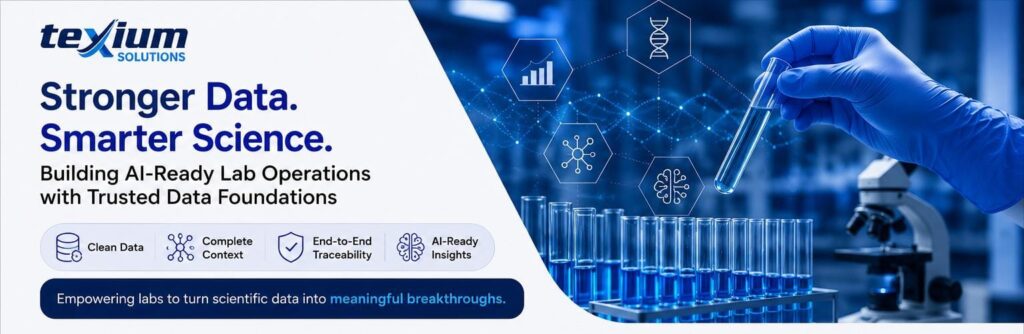
Artificial intelligence is transforming laboratories across the life sciences industry. From predicting experiment outcomes to improving quality control and accelerating drug discovery, AI has become an essential part of modern scientific research.
However, one fact is often overlooked.
Even the most advanced AI models cannot deliver reliable insights if the data behind them is incomplete, inconsistent, or poorly managed. Before laboratories invest in AI-powered analytics, they must first establish a strong data foundation. Clean, connected, and well-governed laboratory data is what ultimately determines whether AI becomes a valuable scientific assistant or an expensive experiment.
Why Laboratory Data Matters More Than Ever
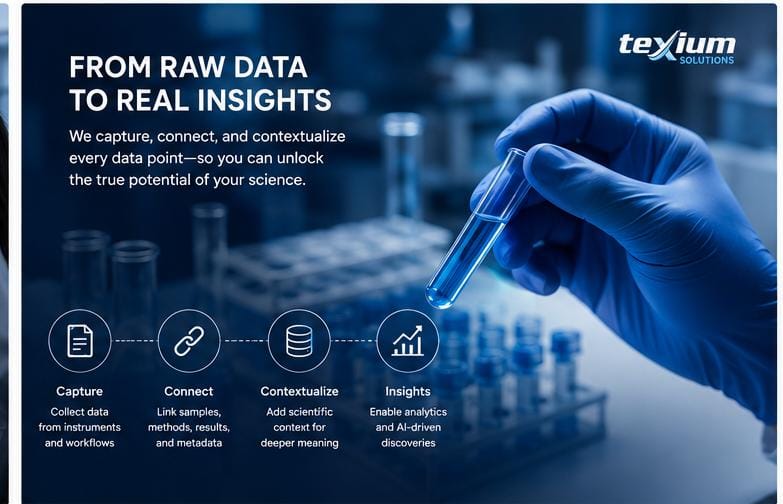
Modern laboratories generate enormous volumes of data every day from a wide range of activities. This information includes sample records, instrument-generated data, test results, experimental observations, quality control records, and regulatory compliance documentation. As laboratories continue to adopt advanced technologies and automation, the amount of data they produce grows even faster. While this data has immense value, it is often spread across multiple software platforms, spreadsheets, paper-based records, and disconnected databases, making it difficult to manage effectively.
When laboratory data exists in isolated silos, organizations face significant operational challenges. Researchers and technicians may encounter duplicate records, manual transcription errors, missing experimental context, and inconsistent data formats. These issues reduce traceability, complicate regulatory audits, slow collaboration between teams, and make it harder to maintain data integrity throughout the research lifecycle. As a result, valuable insights can be overlooked, and decision-making becomes less reliable.
These challenges become even more critical as laboratories begin adopting Artificial Intelligence. AI systems rely on large volumes of accurate, consistent, and well-connected data to identify meaningful patterns and generate reliable predictions. If the underlying data is fragmented, incomplete, or inconsistent, AI models cannot deliver trustworthy insights. Simply put, the quality of AI outcomes depends on the quality of the data it learns from. This is why establishing a unified and well-organized data foundation is essential before laboratories can fully realize the benefits of AI-driven innovation.
Creating a Single Source of Truth
Modern Laboratory Information Management Systems (LIMS) address these challenges by bringing all laboratory information into a single, centralized platform. Instead of managing samples, instruments, workflows, and documentation across multiple systems or spreadsheets, laboratories can streamline every stage of the scientific process within one structured environment. This unified approach improves data organization, reduces manual effort, and minimizes the risk of errors.
A comprehensive LIMS enables laboratories to track every sample from the moment it is received through testing and final reporting while maintaining complete traceability. It securely stores structured laboratory records, automatically captures data generated by analytical instruments, and preserves detailed experiment documentation for future reference and regulatory compliance. By providing real-time access to accurate information, the system also enhances collaboration between researchers, technicians, quality assurance teams, and other departments.
With all critical laboratory data available in one place, scientists spend less time searching for information, updating records, or performing repetitive administrative tasks. Instead, they can focus on what matters most—conducting high-quality research, driving innovation, and delivering reliable scientific results more efficiently..
Better Data Quality Means Better AI
Artificial intelligence delivers the most accurate and reliable results when it is trained and operates on standardized, high-quality data. In laboratory environments, however, data is often recorded using different formats and conventions, making it difficult for AI systems to interpret information correctly. For example, one laboratory may record a temperature as “25°C,” another as “25 C,” while a third simply enters “Room Temp.” Although a human can easily recognize that these entries refer to similar conditions, an AI model may treat them as entirely different values, leading to inaccurate analysis and unreliable predictions.
Standardizing laboratory data eliminates these inconsistencies by ensuring that information is captured in a uniform and structured manner. A well-designed Laboratory Information Management System (LIMS) enforces standard naming conventions, consistent measurement units, structured metadata, controlled vocabularies, mandatory data fields, and automated validation rules. These features help maintain data integrity, reduce human error, and ensure that records remain consistent across experiments, departments, and even multiple laboratory locations.
When laboratory data follows consistent standards, it becomes far more valuable for advanced analytics and artificial intelligence. AI models can process, compare, and interpret information with greater accuracy, enabling faster insights, more reliable predictions, and improved decision-making. In addition, standardized datasets simplify collaboration, support regulatory compliance, and provide a strong foundation for machine learning applications that continue to improve as more high-quality data becomes available.
Preserving Scientific Context
Laboratory data is far more valuable when it is accompanied by the context in which it was generated. Numerical results alone rarely tell the complete story, as researchers also need to understand the circumstances behind each measurement. Important questions often include which instrument produced the result, which analytical method was used, who performed the test, under what environmental conditions the experiment was conducted, and which version of the standard operating procedure (SOP) was followed. Without this contextual information, interpreting results, identifying anomalies, or reproducing experiments can become significantly more challenging.
Modern Laboratory Information Management Systems (LIMS) address this challenge by preserving the complete scientific context alongside every data point. Each result is automatically linked to its associated metadata, experimental notes, instrument details, calibration records, workflow history, and procedural documentation. This creates a comprehensive and traceable record of the entire experimental process, ensuring that every result can be understood, verified, and audited long after the experiment has been completed.
By maintaining this rich contextual information, laboratories improve data integrity, strengthen regulatory compliance, and enhance the reproducibility of scientific research. At the same time, artificial intelligence benefits from access to these detailed datasets, enabling it to identify patterns more accurately, generate deeper insights, and produce more reliable predictions than would be possible using isolated numerical data alone.
Eliminating Manual Data Entry
Manual data entry remains one of the most significant sources of errors in modern laboratories. In many facilities, laboratory personnel still transfer analytical results from instruments into spreadsheets, notebooks, or separate software systems. While this process may seem straightforward, every manual step introduces the possibility of human error. Even minor mistakes, such as typographical errors, missing values, or incorrect sample identification, can compromise data quality, delay decision-making, and affect the reliability of laboratory results. As testing volumes continue to increase, these risks become even more difficult to manage.
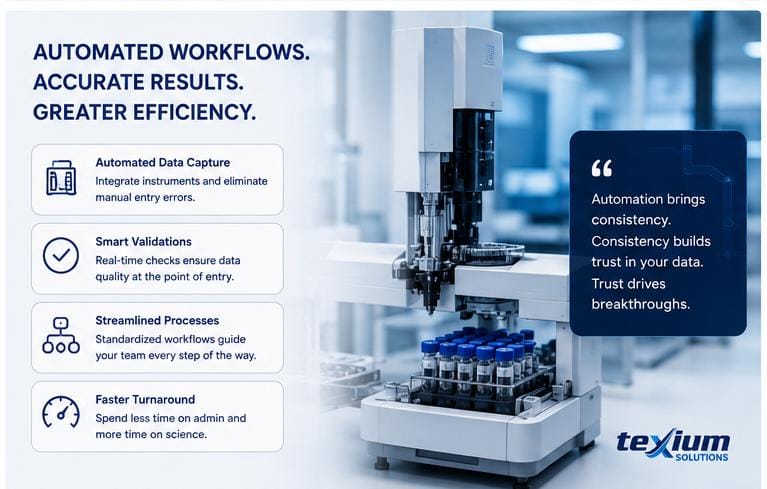
Laboratory automation significantly reduces these challenges by eliminating repetitive data entry tasks. Through direct instrument integration, laboratory systems can automatically capture, store, and associate test results with the correct samples in real time, without requiring repeated manual intervention. This not only minimizes the risk of transcription errors but also ensures that laboratory records remain complete, consistent, and traceable throughout the testing process.
The benefits extend beyond improved accuracy. Automated data capture accelerates result processing, reduces administrative workload, and enables laboratory staff to focus on scientific analysis rather than routine documentation. Standardized digital workflows also improve consistency across laboratories while supporting regulatory compliance and audit readiness. Ultimately, automation increases confidence in laboratory data by ensuring that results are captured accurately, processed efficiently, and made available faster for research, quality control, and informed decision-making.
Strengthening Regulatory Compliance
Life sciences laboratories operate in highly regulated environments where the accuracy, security, and traceability of data are essential. Regulatory agencies require laboratories to maintain complete and reliable records throughout the entire lifecycle of a sample, from collection and testing to reporting and long-term storage. Every action performed within the laboratory must be documented and verifiable to ensure data integrity, support reproducibility, and demonstrate compliance with industry standards. Managing these requirements manually can be both time-consuming and prone to errors, especially as laboratories grow in size and complexity.
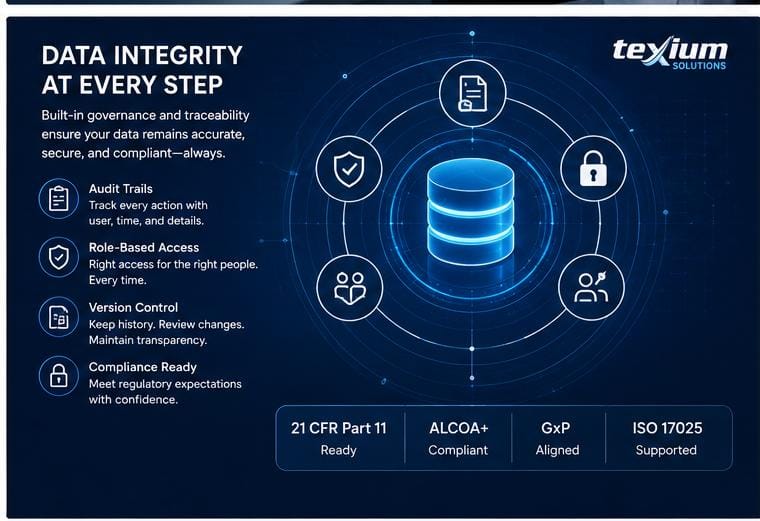
Modern digital laboratory platforms simplify regulatory compliance by incorporating built-in features that promote transparency and accountability. Comprehensive audit trails automatically record every modification made to laboratory data, capturing details such as who performed the action, what changes were made, and when they occurred. Electronic signatures provide secure digital approval for laboratory records and workflows, while version history ensures that previous document revisions remain accessible without compromising current records. Role-based access controls restrict sensitive information and critical functions to authorized personnel, reducing the risk of unauthorized changes or accidental data manipulation. In addition, secure data storage protects valuable laboratory information from loss, corruption, or unauthorized access, while controlled workflow approvals ensure that every process follows predefined quality and regulatory requirements.
Together, these capabilities help laboratories maintain the highest standards of data integrity while reducing the administrative burden associated with compliance. During internal audits or regulatory inspections, authorized personnel can quickly retrieve complete records, verify workflow history, and demonstrate adherence to established procedures. By embedding compliance into everyday laboratory operations, digital laboratory platforms not only simplify regulatory reviews but also strengthen operational efficiency, improve quality management, and build greater confidence in the accuracy and reliability of scientific data.
Making Laboratory Data Ready for AI
Preparing laboratory data for artificial intelligence is often more challenging than implementing AI itself. While AI and machine learning models have the potential to transform laboratory operations through predictive analytics and intelligent decision-making, their performance depends entirely on the quality of the data they receive. If laboratory data is incomplete, inconsistent, or poorly organized, even the most advanced AI algorithms will struggle to generate accurate and reliable insights. This is why building a strong data foundation is a critical first step in any laboratory’s AI journey.
To support effective AI adoption, laboratory data must be accurate, complete, consistent, searchable, standardized, and fully traceable. Every result should be linked to its associated metadata, including sample information, analytical methods, instruments, operators, and workflow history. Standardized data formats and structured records enable AI models to interpret information correctly, while comprehensive traceability ensures that every data point can be verified and audited. These practices not only improve data quality but also enhance collaboration, reproducibility, and confidence in scientific findings.
Organizations that prioritize data quality today will be far better positioned to leverage advanced analytics in the future. Instead of spending months cleaning fragmented historical records or correcting inconsistencies, they can focus on developing machine learning models, uncovering hidden trends, predicting equipment failures, optimizing laboratory workflows, and accelerating research outcomes. By investing in robust data management and digital laboratory systems, laboratories create a scalable foundation that supports both current operations and future AI-driven innovation. In many cases, the success of AI initiatives depends less on the sophistication of the algorithms and more on the quality, structure, and accessibility of the underlying laboratory data.
The Role of Digital Transformation
Digital transformation in the laboratory extends far beyond replacing paper records with software. It is about building an intelligent, connected ecosystem where data flows seamlessly between laboratory personnel, analytical instruments, workflows, and enterprise systems. Instead of operating in isolated silos, modern laboratories integrate every stage of the scientific process into a unified digital environment. This ensures that information is captured once, shared securely across teams, and made available in real time to support informed decision-making and efficient laboratory operations.
When laboratory data is connected across the organization, researchers, quality teams, and management gain instant access to accurate and up-to-date information. This improves collaboration by allowing multiple departments to work from the same trusted data while reducing duplication of effort and communication gaps. Integrated digital workflows also enhance operational efficiency by automating routine tasks, streamlining approvals, and providing greater visibility into samples, experiments, and laboratory performance. With centralized data, organizations can identify trends more quickly, optimize resource utilization, and make faster, evidence-based decisions that improve both productivity and scientific outcomes.
Perhaps the greatest advantage of digital transformation is that it prepares laboratories for the future. As artificial intelligence, machine learning, cloud computing, and advanced analytics continue to evolve, organizations with connected, high-quality laboratory data will be able to adopt these technologies more effectively. Rather than investing significant time in organizing fragmented records, they can immediately leverage AI to uncover insights, predict outcomes, automate complex workflows, and accelerate scientific discovery. In this way, digital transformation not only improves today’s laboratory operations but also creates a strong foundation for continuous innovation and long-term growth.
How Texium Solutions Helps
At Texium Solutions, we help life sciences organizations modernize laboratory operations through intelligent digital solutions that improve data quality, streamline workflows, and strengthen compliance. Our expertise includes laboratory informatics, workflow automation, system integration, cloud-based platforms, AI readiness, and data governance. We work closely with organizations to build scalable laboratory environments where scientific data remains accurate, connected, and ready for advanced analytics. Whether your goal is improving operational efficiency, preparing for AI adoption, or strengthening regulatory compliance, our solutions provide the digital foundation needed for long-term success.
Final Thoughts
Artificial intelligence is changing the future of laboratory operations, but its success depends entirely on the quality of the data it receives. Organizations that prioritize structured data, standardized workflows, automation, and strong governance will gain far more value from AI than those that focus only on algorithms. Building AI-ready laboratories begins with building AI-ready data. With the right digital strategy and technology partner, laboratories can create a trusted data foundation that supports scientific innovation, regulatory excellence, and smarter decision-making for years to come.